
Water Softener Regenerating Too Often: Causes and Fixes
Content updated
Sources last checked
A water softener may regenerate because measured use reaches its programmed capacity, a timer or day override is due, or a manual request was made. If cycles seem unusually frequent, compare actual softened-water use, inlet hardness, usable capacity at the programmed salt dose, reserve and override settings. A leak or persistent drain flow is another possibility; one symptom alone cannot identify the cause.
Start with an estimate: divide the documented usable capacity at the selected salt dose by inlet hardness in grains per gallon to estimate gross gallons between regenerations. The controller may reserve capacity or use a day override, so compare this estimate with its event record and actual use before changing settings.
Frequency rule: Work out the expected interval from capacity, hardness and water use before changing anything. Fix the input that is wrong, rather than lowering the hardness setting to make cycles less frequent.
How often is normal
EPA's water softener guide and its WaterSense at Work guidance name the same three drivers: the hardness of the incoming water, how much water you use, and how much hardness the softener can remove per cycle. EPA's example: a 32,000-grain softener can remove 32,000 grains of hardness before it needs to regenerate.
A worked example (your numbers will differ):
| Input | Example value |
|---|---|
| Softener capacity | 32,000 grains |
| Water hardness | 15 gpg |
| Gallons between regenerations | 32,000 ÷ 15 ≈ 2,130 gallons |
| Household softened-water use | 250 gallons per day |
| Expected interval | 2,130 ÷ 250 ≈ 8.5 days |
Some delayed-regeneration controllers hold back a reserve (see check 3); immediate operation and override rules can behave differently. This example is a gross load estimate, not a guaranteed interval. If your softener regenerates every day or two while this estimate says a week or more, work through the checks below. The sizing calculator does the same math with your own inputs, and the salt usage calculator shows what the cycles cost in salt.
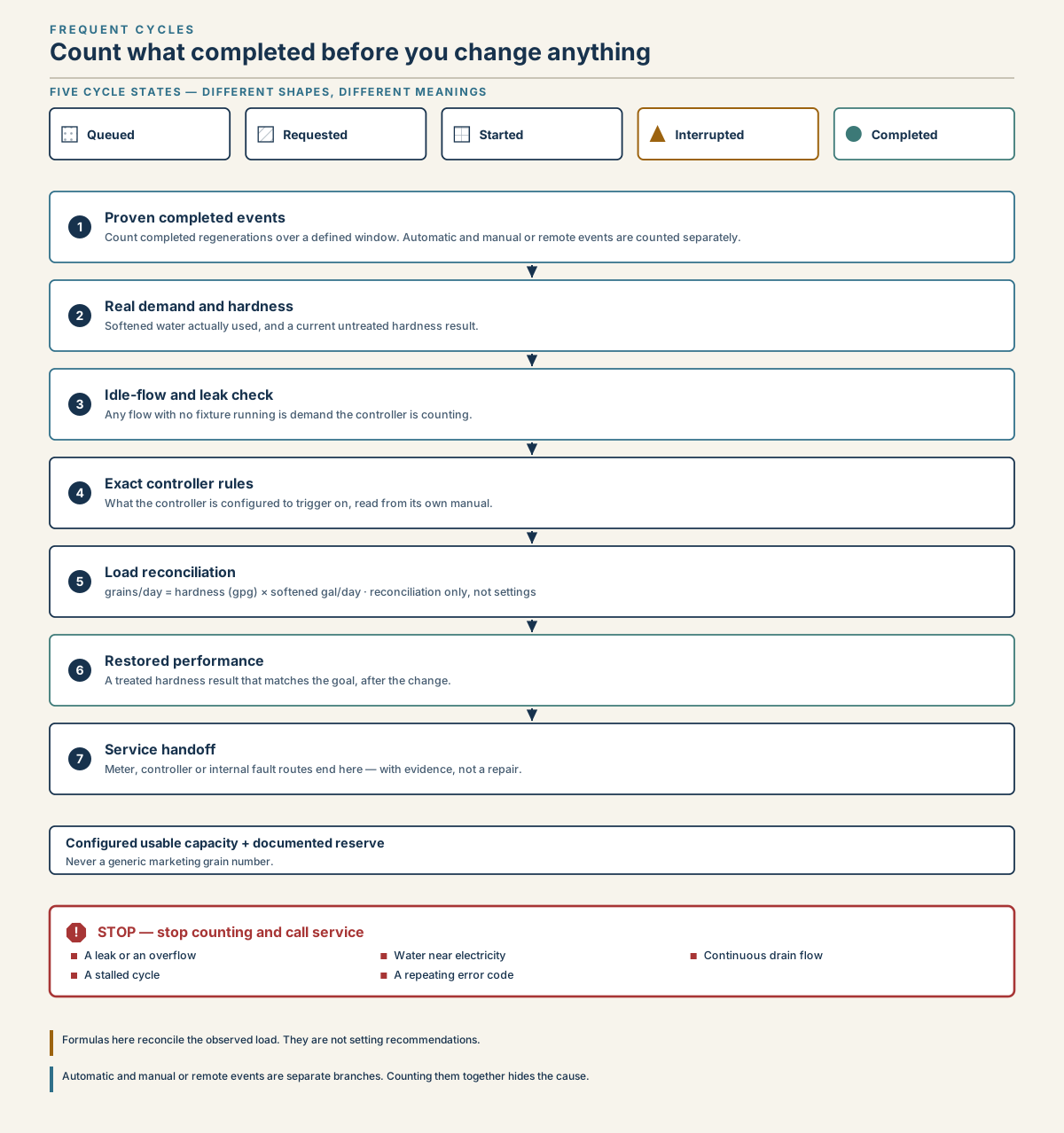
Cause tree for frequent water softener regeneration using completed cycles, load, leaks, settings and performance evidence.
Read diagram in text
- FREQUENT CYCLES
- Count what completed before you change anything
- FIVE CYCLE STATES — DIFFERENT SHAPES, DIFFERENT MEANINGS
- Queued
- Requested
- Started
- Interrupted
- Completed
- 1
- Proven completed events
- Count completed regenerations over a defined window. Automatic and manual or remote events are counted separately.
- 2
- Real demand and hardness
- Softened water actually used, and a current untreated hardness result.
- 3
- Idle-flow and leak check
- Any flow with no fixture running is demand the controller is counting.
- 4
- Exact controller rules
- What the controller is configured to trigger on, read from its own manual.
- 5
- Load reconciliation
- grains/day = hardness (gpg) × softened gal/day · reconciliation only, not settings
- 6
- Restored performance
- A treated hardness result that matches the goal, after the change.
- 7
- Service handoff
- Meter, controller or internal fault routes end here — with evidence, not a repair.
- Configured usable capacity + documented reserve
- Never a generic marketing grain number.
- !
- STOP — stop counting and call service
- A leak or an overflow
- Water near electricity
- Continuous drain flow
- A stalled cycle
- A repeating error code
- Formulas here reconcile the observed load. They are not setting recommendations.
- Automatic and manual or remote events are separate branches. Counting them together hides the cause.
1. Hardness set too high
An excessive hardness setting can make a metered controller calculate that capacity is being used faster. The effect on cycle frequency depends on its reserve, override and other settings; do not infer a fixed ratio from the hardness setting alone.
- Test your untreated water, from a tap before the softener or the bypassed supply, with a test kit, or look up your utility's water quality report. See how to test water hardness.
- Compare the result with the setting on the controller. Watch the units: many controls expect grains per gallon; 1 gpg = 17.12 mg/L.
- A setting above the test result is sometimes intended. Whirlpool's WHES18 manual says to raise it 25% if you use potassium chloride instead of sodium chloride. For iron, check your manual: the Whirlpool WHES48 says not to raise hardness, because its separate iron setting compensates automatically.
The hardness-setting guide walks through entering the right number.
2. More water use than you think
A metered softener counts every gallon that goes through it. A running toilet or a dripping outdoor line on the softened side adds hundreds of gallons a week, and the softener regenerates to keep up.
Check for a leak the way EPA's home maintenance guidance describes: read your water meter when no water is being used, wait two hours without using any, and read it again. If it moved, you probably have a leak.
Other ways the count climbs:
- Outdoor water going through the softener. EPA recommends bypassing the softener for lawn watering, car washing or filling a pool, or plumbing outdoor lines to branch off before it.
- Houseguests or a new appliance that uses more water.
- A metered controller shows the flow. On the Whirlpool WHES48, the Water Flow and Water Used Today screens show gallons; on the Fleck 5600SXT the diagnostic mode shows flow rate and volume used. With every fixture off, the flow reading should be zero.
3. Reserve and day-override settings
Two settings can make a softener regenerate before its capacity is used up.
- Reserve. Many metered controls hold part of the capacity back so you do not run out of soft water before the night's regeneration. On the Fleck 5600SXT, the reserve is either a safety factor from 0% to 50% of capacity or a fixed volume, which the manual caps at half the calculated capacity. A reserve set near the top of that range can nearly double how often the unit regenerates.
- Day override (called maximum days between regenerations on Whirlpool). It forces a regeneration after a set number of days, even if capacity remains. Whirlpool's manuals say the automatic mode gives the best efficiency under most conditions; a short override, such as every 2 days, overrides the meter.
The Pentair 5600SXT manual shows how a metered control computes capacity: unit capacity divided by feedwater hardness, minus the reserve. If the unit capacity is entered lower than your softener's real rating, cycles come early. Pentair's FAQ and its whole-house manual give the same checklist for a unit that uses too much salt or regenerates too often: check the hardness, capacity, reserve, meter and salt-dose settings for your system size. These are installer-level settings; change them with the manual open, and write down the old values first.
4. Salt efficiency mode and iron settings
Some softeners run more, smaller regenerations on purpose.
- Salt efficiency mode. Whirlpool's WHES18 and WHES48 manuals describe a Salt Efficiency setting that runs at 4,000 grains or more per pound of salt and may recharge more often using a smaller salt dose and less water per cycle. It is off from the factory, but the manuals require it on for installations in California. If it is on, more frequent cycles are expected: the aim is to remove more hardness per pound of salt.
- Iron. On the WHES48, the iron setting adjusts cycle times to handle clear-water iron. If your controller has an iron setting, check that it matches a current iron test.
5. Water running to the drain
If water trickles or flows to the drain between regenerations, the valve may not be sealing. EPA's guide says a continuous trickle or flow to the drain could indicate a broken valve or other malfunction, and Pentair lists internal leaks and a powerhead that does not finish its cycle as causes of constant drain flow.
Observe the secured drain termination from a safe position after the display returns to service, following the exact manual. Do not move the hose or leave discharge collecting in a bucket overnight. Persistent unexplained drain flow warrants qualified service. A valve that "cycles continuously" is covered in the Pentair tables too, and points to switches or the timer.
6. A softener that is too small or worn out
If the settings are right, there is no leak and the drain is dry, the softener may simply be too small for the household. EPA notes that both your hardness and your water use determine the size you need; a family that grew, or a softener bought for a smaller house, will regenerate often.
Resin that has lost capacity (from iron fouling or age) has the same effect. Pentair's whole-house manual lists decreasing exchange capacity of the resin as a cause of hard water, with cleaning or replacing the resin bed as the fix. The repair-or-replace guide helps decide whether new resin or a new softener is the better option.
Frequently asked questions
How often should a water softener regenerate?
It depends on capacity, hardness and water use. Divide the capacity in grains by your hardness in gpg to get gallons between cycles, then divide by daily use. A 32,000-grain unit on 15 gpg water treats roughly 2,100 gallons, so a household using 250 gallons a day would regenerate about weekly, somewhat sooner with a reserve.
Can a leak make a softener regenerate more?
Yes. A metered softener counts every gallon, including water lost to a running toilet or a leaking line on the softened side. EPA's check: read the water meter, use no water for two hours, and read it again. If the meter moved, find and fix the leak before changing any softener settings.
Should I lower the hardness setting to reduce regenerations?
Only if the current setting is higher than your tested water hardness. Setting it below the real value makes the softener run out of capacity before it regenerates, and hard water gets through. Test untreated water, convert to the units the controller expects, and enter that number, adding extra only where your manual says to.
Is regenerating every day bad for a softener?
Not in itself: Whirlpool's salt efficiency mode, for example, may regenerate more often by design. The cost is salt and water: EPA puts typical use at 20 to 70 gallons per cycle. If daily cycles do not match your capacity and water use, check the hardness, leak and reserve settings to bring the interval back in line.
Sources
Sources were consulted on the dates shown. Controller settings and their names differ by model, so confirm them against your current manual.
- U.S. Environmental Protection Agency, WaterSense at Work technical section; consulted September 24, 2026.
- U.S. Environmental Protection Agency WaterSense, Home Maintenance — Water Softeners, updated June 16, 2026; consulted September 24, 2026.
- U.S. Environmental Protection Agency WaterSense, Guide to Selecting and Maintaining a Water-Efficient Water Softener, May 2026; consulted September 24, 2026.
- U.S. Environmental Protection Agency WaterSense, Cation Exchange Water Softeners, updated May 8, 2026; consulted August 27, 2026.
- Pentair, Residential Filtration FAQs; consulted September 24, 2026.
- Pentair, Pentair 5600SXT manual; consulted September 24, 2026.
- Pentair, Whole House Water Softening System Installation and Operation Manual; consulted September 24, 2026.
- Pentair, IntelliWater Connected Water Softener Service Manual, Installation and Operation Guide; consulted August 27, 2026.
- Whirlpool Water Solutions, Whirlpool WHES18 manual; consulted September 24, 2026.
- Whirlpool Water Solutions, Whirlpool WHES48 manual; consulted September 24, 2026.
- NSF, Technical Requirements of NSF/ANSI 44: Cation Exchange Water Softeners; consulted August 27, 2026.