
Water Softener Buying Guide and Checklist
Sources last checked
Buy a water softener only after the proposal connects a measured hardness problem to an exact model, documented performance, complete installation scope and written acceptance test. Do not choose from a “grain” number, household-size label, sales demonstration, certification logo or purchase price alone.
Printable worksheet
Water Softener Buying Guide and Checklist
Use a model-neutral water softener buying guide to verify water data, capacity, flow, efficiency, installation, cost, warranty and commissioning before signing.
Open the water softener buying guide and checklist (print sheet, US Letter)Print at 100% scale. Fits US Letter without cropping.
This checklist uses four decisions for every field:
- Pass: evidence is present and fits the requirement.
- Fail: evidence conflicts with a non-negotiable requirement.
- Pause: a material fact is missing or needs qualified review.
- Not applicable: evidence shows the field does not apply to this project.
One unresolved critical field is enough to pause signing. The goal is not to find a universal “best” water softener; it is to find a defensible fit for one water supply, home and ownership plan.
Buying rule: Do not sign while a critical field is unknown. A defensible proposal connects measured water and demand to an exact model, stated performance, complete installation scope, ownership cost and a written acceptance test.
Define the job before the product
Write one primary treatment statement before requesting quotes:
Reduce measured calcium/magnesium hardness from [untreated result and unit] at [sample point/date] for [fixtures/uses], while meeting [peak flow, efficiency, installation and ownership constraints].
If the statement instead names chlorine, iron, lead, odor, microbiology or another concern, do not assume a cation-exchange softener is the correct technology. Define and verify that treatment objective separately.
Use the water softener vs. conditioner guide when proposals mix hardness removal and scale reduction. Use the city-water guide to connect a public-system report with a representative home hardness result.
Record these pass/pause fields:
- correct water source and service address;
- current report or laboratory/test record;
- untreated hardness, unit, method, point and date;
- other water conditions relevant to model limits;
- intended treated fixtures and untreated branches;
- expected peak simultaneous flow;
- typical and exceptional softened-water demand;
- drain, power, footprint and service access; and
- local installation/discharge constraints checked.
Do not allow a salesperson to replace missing measurements with the number of people in the home.
Build the water and demand record
Hardness input
Keep hardness in the source unit and document conversions. A reported range needs a design rationale: source blending or seasonal changes may make one average inappropriate for capacity and settings.
If hardness is unknown, pause. Use a utility source, suitable test or qualified laboratory appropriate to the decision. Symptoms such as spotting or poor lather can motivate testing but cannot supply a setting.
Water demand
Record actual softened-water use when available. Separate outdoor and other uses that will bypass the unit. Identify peak simultaneous fixtures because daily gallons and peak flow answer different questions.
EPA's 2026 softener guide recommends sizing from hardness and water use and cautions against oversizing. The sizing calculator can organize those inputs, but its result is not a product recommendation.
Other water conditions
Compare the proposed model's incoming-water limits with measured conditions. Do not infer suitability for iron, sediment, disinfectant, pH, microbiology or another parameter from hardness data alone.
When pretreatment is quoted, require the measurement, product claim, maintenance and effect on flow/pressure. Mark the whole proposal pause if the underlying water condition has not been established.
Verify exact-model performance
Copy the complete manufacturer, trade name and model from the quote. A family name or cabinet photo is not enough.
For that exact model, obtain:
- installation/operation manual and revision;
- performance data sheet;
- current certification listing;
- rated service flow and pressure drop;
- capacity at each tested salt dose;
- efficiency claim and test basis;
- regeneration type, reserve and override behavior;
- water per regeneration or normalized water-efficiency data when published;
- electrical, pressure, temperature, drain and location limits;
- media/resin quantity if relevant to the specification; and
- warranty terms and exclusions.
NSF/ANSI 44 establishes requirements for residential cation-exchange softeners and includes areas such as hardness reduction, capacity, rinse effectiveness, pressure drop, structural integrity and brine-system accuracy.
Use a current certifier database. In the NSF Standard 44 listings, model entries can show claim codes such as hardness reduction or efficiency rated. Confirm what the exact entry says; do not extend one model's listing to another.
A logo on a brochure is not enough if the quoted model and promised claim cannot be matched. Mark it “pause: claim not verified.”
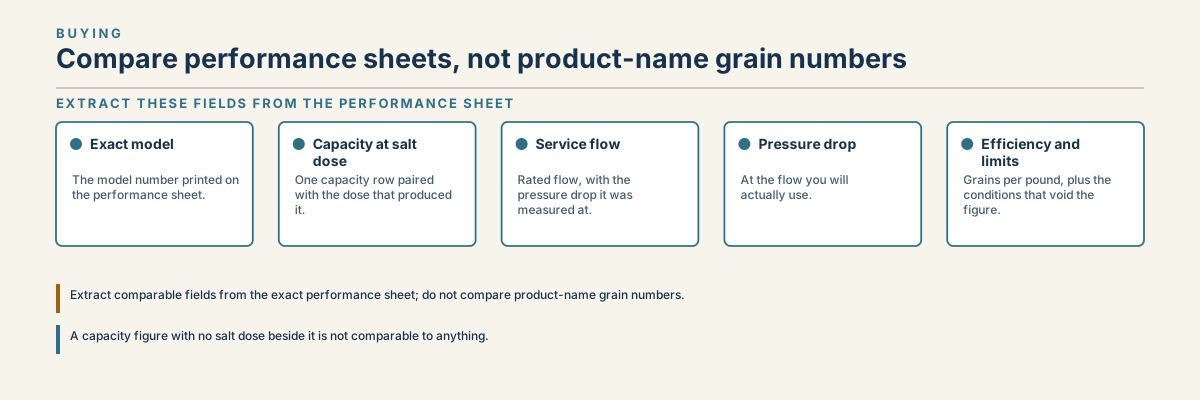
Performance data worksheet highlighting model, salt-dose capacity, service flow, pressure drop and efficiency.
Read diagram in text
- BUYING
- Compare performance sheets, not product-name grain numbers
- EXTRACT THESE FIELDS FROM THE PERFORMANCE SHEET
- Exact model
- The model number printed on
- the performance sheet.
- Capacity at salt
- dose
- One capacity row paired
- with the dose that produced
- it.
- Service flow
- Rated flow, with the
- pressure drop it was
- measured at.
- Pressure drop
- At the flow you will
- actually use.
- Efficiency and
- limits
- Grains per pound, plus the
- conditions that void the
- figure.
- Extract comparable fields from the exact performance sheet; do not compare product-name grain numbers.
- A capacity figure with no salt dose beside it is not comparable to anything.
Compare usable capacity, flow and efficiency
Capacity must be paired with salt dose
Do not treat a model name such as “48,000 grain” as the amount you should use between regenerations. Performance sheets can show different capacities at different salt doses. Record the selected pair:
usable capacity = documented grains at selected pounds of salt per regeneration
Then document reserve and the load calculation. If the provider supplies capacity without salt dose, pause the quote.
Service flow must fit the home
Compare rated service flow and pressure drop with the documented peak simultaneous demand and plumbing. A capacity that lasts many days does not prove the system can serve peak flow without unacceptable pressure or hardness leakage.
Ask what result and pressure condition define acceptable service. Do not accept a tank-size comparison as a flow calculation.
Efficiency needs comparable units
EPA WaterSense recommends considering both water and salt efficiency. Compare:
- grains of hardness removed per pound of salt at the quoted setting;
- gallons of regeneration water per 1,000 grains removed, when documented;
- demand-initiated rather than only fixed-schedule regeneration; and
- expected cycles from the same hardness/demand assumptions.
Water softeners are not currently eligible for the WaterSense product label. EPA publishes selection guidance, but a seller cannot turn that guidance into a model-specific WaterSense label.
Normalize installation and first-year cost
Use a delivered equipment price only for the equipment column. The water softener cost guide separates equipment, installed and first-year totals. The installation quote guide assigns plumbing, bypass, drain/air gap, electrical, continuity, permit, restoration, disposal and commissioning scope.
For each quote, resolve:
- fixed amount versus estimate or time-and-materials;
- included, excluded, allowance or not-applicable status;
- equipment, labor, materials, tax and delivery;
- existing loop versus new cut-in/reroute;
- bypass and untreated branches;
- drain, overflow and approved termination;
- power and qualified electrical/continuity review;
- permit, inspection and restoration;
- removal and disposal;
- programming, testing and owner handoff;
- change-order authorization; and
- quote expiration and payment milestones.
Then add first-year salt, regeneration water/sewer, electricity when measurable, maintenance, required consumables and financing cost if used. Every amount needs source, date and location. Do not credit speculative appliance savings against the purchase price.
Review warranty, maintenance and service
A warranty does not predict service life. Read the exact document and record:
- warrantor and purchaser eligibility;
- coverage start date;
- separate periods for tank, valve, controller, media, parts and labor;
- registration or maintenance requirements;
- exclusions for water conditions, pressure, temperature, freezing or installation;
- transferability;
- shipping, travel and diagnostic charges;
- remedy: repair, part, replacement or credit; and
- who provides local warranty labor.
Ask the provider to name the service organization, response process and parts source. A long component warranty has limited operational value if diagnosis, labor or parts availability is undefined.
Build a maintenance plan from the exact manual:
- salt/regenerant type and refill access;
- owner inspection tasks;
- cleaner or consumable only when specified;
- professional-service recommendation;
- hardness and cycle record;
- update cadence for settings after source or household change; and
- safe bypass/emergency information.
If a maintenance claim says “none,” compare it with the manual. Mark any conflict as fail or pause.
Apply rejection and pause rules
Reject the proposal when
- the seller will not identify the exact model before contract;
- the product claim conflicts with the current certification listing or manual;
- the proposed equipment cannot meet a documented non-negotiable flow, pressure, water-quality or installation limit;
- the provider asks you to ignore an active leak, unsafe electrical condition or prohibited discharge;
- the contract substitutes equipment or material without written approval;
- a contaminant or health claim is asserted without exact, applicable evidence; or
- material contract terms are false or irreconcilable.
Pause the proposal when
- hardness, units or sample point are missing;
- source variation or another water condition needs testing;
- capacity is not paired with salt dose;
- rated service flow or pressure drop is missing;
- certification cannot yet be matched to the quoted model;
- installation uses an undefined “standard” scope;
- local permit, discharge or trade responsibility is unresolved;
- commissioning lacks a treated-hardness acceptance criterion;
- allowance and change-order rules are blank; or
- warranty labor and service route are unclear.
A lower price is not a pass
Price is evaluated after requirements. A proposal that omits a drain route, startup testing or the exact model may be cheaper because it is incomplete.
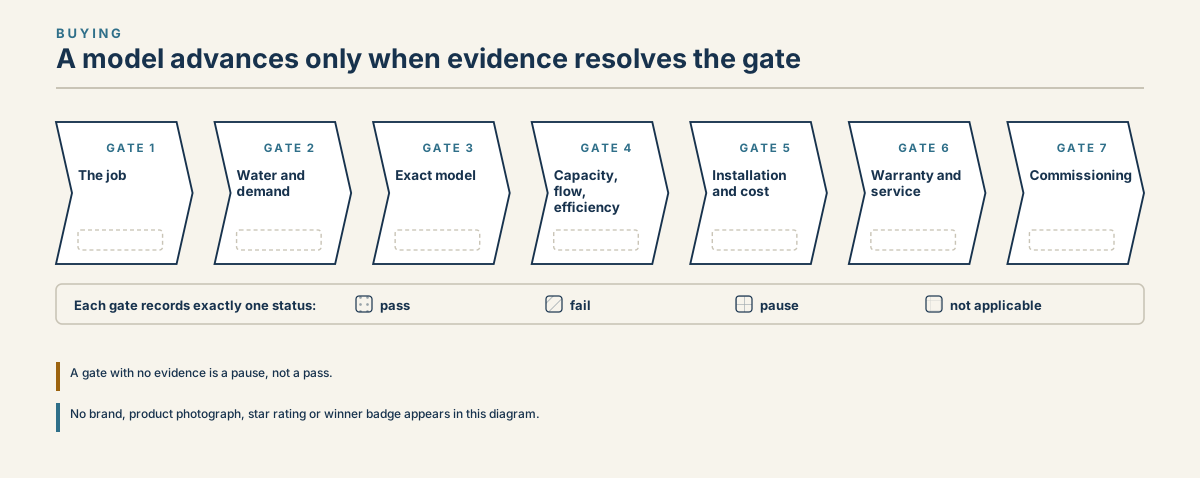
Water softener buying flow with evidence gates for water, performance, installation, cost, warranty and commissioning.
Read diagram in text
- BUYING
- A model advances only when evidence resolves the gate
- GATE 1
- The job
- GATE 2
- Water and
- demand
- GATE 3
- Exact model
- GATE 4
- Capacity,
- flow,
- efficiency
- GATE 5
- Installation
- and cost
- GATE 6
- Warranty and
- service
- GATE 7
- Commissioning
- Each gate records exactly one status:
- pass
- fail
- pause
- not applicable
- A gate with no evidence is a pause, not a pass.
- No brand, product photograph, star rating or winner badge appears in this diagram.
Contract, commissioning and handoff
Before signing, attach or reference:
- water and demand worksheet;
- exact model/manual/performance sheet;
- certification-listing snapshot with date;
- scope drawing and inclusion matrix;
- fixed prices, allowances and change rules;
- schedule and payment milestones;
- responsible trades and permit/inspection roles;
- warranty documents; and
- commissioning acceptance plan.
At completion, collect:
- model/serial and installation photos;
- labels for inlet, outlet, bypass and untreated branches;
- leak, drain/overflow and required electrical/continuity checks;
- settings: hardness/units, capacity/dose, reserve, regeneration type and time;
- untreated and treated hardness with method, point, date and cycle context;
- startup/natural cycle record and return to service;
- final invoice and approved changes;
- manual, performance sheet, warranty and registration; and
- maintenance and service contacts.
Do not sign final acceptance while a critical safety item or agreed performance test remains open. A failed treated-hardness result needs documented diagnosis and correction, not repeated random setting changes.
Frequently asked questions
What grain capacity should I buy?
Use documented hardness load, reserve, service flow and the capacity at a specific salt dose, not the largest number in the model name. Performance sheets can show different capacities at different doses, so if a provider supplies capacity without the paired salt dose, pause the quote.
Is NSF certification required?
Requirements vary, but independent product certification is strong evidence. Verify the exact standard, model and listed claim in a current certifier database, and check local requirements separately. A logo on a brochure is not enough when the quoted model and promised claim cannot be matched.
Is a more expensive softener better?
Price alone cannot answer, and this checklist recommends no brand. Compare verified performance, installed scope, operating inputs, warranty and service against the same requirements. A cheaper proposal may simply be incomplete, omitting the drain route, startup testing or the exact model.
Should I buy online or through an installer?
Compare the complete responsibilities: sizing, delivery, installation, commissioning, warranty labor, returns and service. The purchase channel is not a substitute for evidence. Request enough comparable written proposals to see scope differences; two complete quotes beat several offers missing models or performance data.
Sources
Sources were consulted on August 27, 2026. Product listings, manuals and prices change, so confirm the exact model and current claims before you sign a contract.
- U.S. Environmental Protection Agency WaterSense, Guide to Selecting and Maintaining a Water-Efficient Water Softener, May 2026; consulted August 27, 2026.
- NSF, NSF/ANSI 44 Technical Requirements, March 8, 2025; consulted August 27, 2026.
- NSF, Official NSF/ANSI 44 Product Listings; consulted August 27, 2026.
- U.S. Environmental Protection Agency WaterSense, Cation Exchange Water Softeners, updated May 8, 2026; consulted August 27, 2026.
- Pentair, Whole House Water Softening System Installation and Operation Manual; consulted August 27, 2026.
- Whirlpool Water Solutions, Whirlpool WHES18 manual; consulted August 27, 2026.