
How to Manually Regenerate a Water Softener
Content updated
Sources last checked
Some controllers offer both an immediate regeneration request and a delayed one. The Whirlpool and Fleck 5600SXT examples below use different button names and hold times; use only the sequence in your exact model's manual. Do not assume a short or long press means the same thing on another controller.
Cycle length and water available to the home vary by model. Record the start and completion shown by your controller, follow its guidance on water use during the cycle, and test treated hardness after the system returns to service.
Owner rule: Use the regenerate command, not the stage-advance or programming modes. If the tank is leaking, the drain hose is loose, or water is near the power supply, fix that or call for service before starting a cycle.
When a manual regeneration makes sense
Regeneration flushes the resin with brine and rinse water so it can soften again. EPA's cation-exchange softener overview notes that every cycle uses salt and water, so an extra one should have a reason. Common good reasons:
- You ran out of salt and just refilled. The resin went without brine and is likely exhausted.
- You broke a salt bridge. Same situation: no brine was reaching the resin. Pentair's 5600SXT manual says to wait about two hours after loosening the salt before starting the regeneration, and that a second one may be needed. See the salt bridge guide.
- You are expecting unusually high water use, such as houseguests, and want full capacity going in.
- After sanitizing the softener or cleaning the brine tank, when your manual calls for a regeneration to draw the cleaner through.
- Your controller shows a "regen failure" or overdue code. On the Fleck 5600SXT, a manual regeneration clears the code shown when the unit has gone more than 99 days without regenerating.
If the water is hard for no obvious reason, one extra cycle is a reasonable first test, but repeating cycles will not fix a settings or brine-draw problem. Check the regeneration guide and the troubleshooting guide if one cycle does not help.
Buttons on common controllers
These are the commands printed in the manufacturers' manuals. If your model is not listed, look for a button labeled Regen, Recharge, Regenerate or Extra Cycle, and check the manual for the difference between a short and a long press.
| Controller | Regenerate now | Regenerate tonight | Cancel |
|---|---|---|---|
| Whirlpool WHES18 (button display) | Hold Recharge until "RECHARGE NOW" flashes | Press and release Recharge once | See manual |
| Whirlpool WHES48 (touch screen) | Press Recharge, then Recharge Now | Press Recharge, the left arrow, then Schedule Recharge and On | Set Schedule Recharge back to off |
| Pentair Fleck 5600SXT | Hold Extra Cycle for 5 seconds | Press Extra Cycle once; the service icon flashes | Press Extra Cycle again while queued |
Sources: Whirlpool WHES18 manual, Whirlpool WHES48 manual, Pentair 5600SXT manual.
"Tonight" uses the regeneration time set in the controller. Whirlpool ships it at 2:00 a.m. because little water is used then; on the 5600SXT it is the "RT" setting.
Step by step
- Check the salt. There should be salt above the water line in the brine tank. If the tank is empty, add salt first and, if you just broke a bridge, give the salt time to dissolve.
- Look at the installation. No leaks around the tank or valve, drain hose secured in its drain, bypass valve in the service (open) position.
- Choose now or tonight. Use "now" if you need soft water today; use "tonight" if it can wait, so the cycle runs while nobody is using water.
- Press the button as shown in the table above and watch for the confirmation: a flashing "RECHARGE" on Whirlpool units, or the display switching to cycle step 1 on the 5600SXT.
- Leave it alone. Avoid showers, laundry and the dishwasher until the display returns to normal.
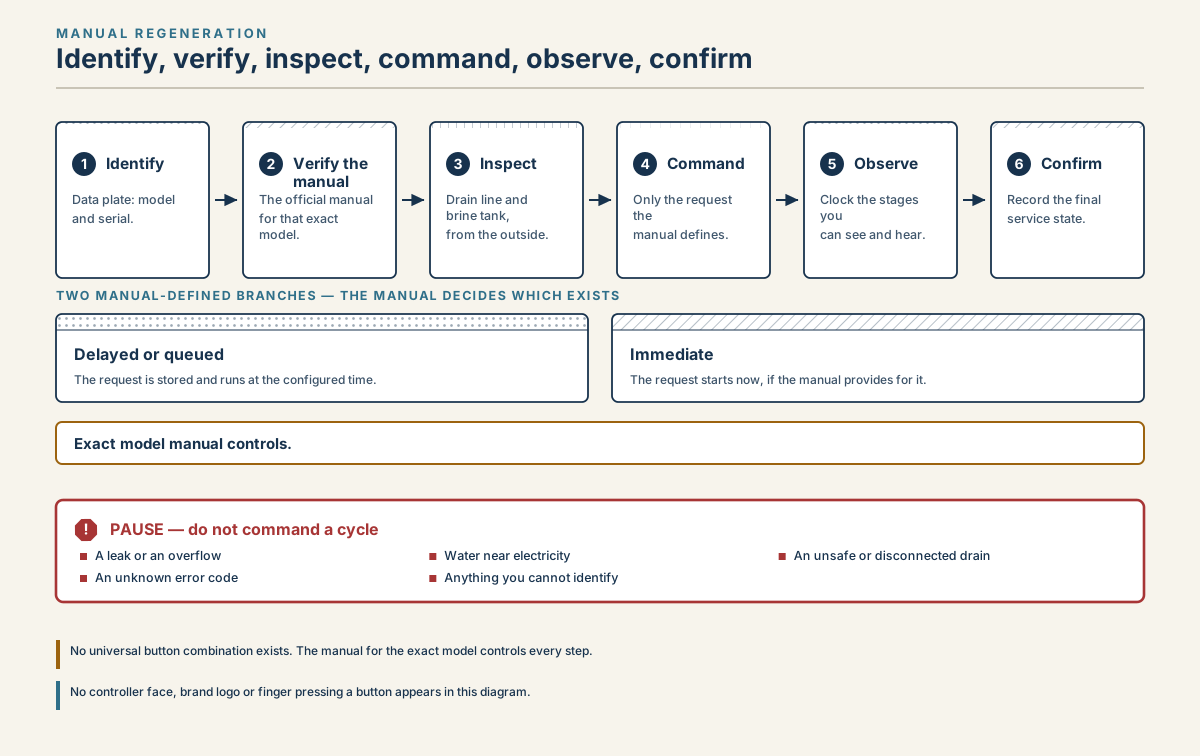
Model-specific checklist for safely requesting and documenting a manual water softener regeneration.
Read diagram in text
- MANUAL REGENERATION
- Identify, verify, inspect, command, observe, confirm
- 1
- Identify
- Data plate: model
- and serial.
- 2
- Verify the
- manual
- The official manual
- for that exact
- model.
- 3
- Inspect
- Drain line and
- brine tank,
- from the outside.
- 4
- Command
- Only the request
- the
- manual defines.
- 5
- Observe
- Clock the stages
- you
- can see and hear.
- 6
- Confirm
- Record the final
- service state.
- TWO MANUAL-DEFINED BRANCHES — THE MANUAL DECIDES WHICH EXISTS
- Delayed or queued
- The request is stored and runs at the configured time.
- Immediate
- The request starts now, if the manual provides for it.
- Exact model manual controls.
- !
- PAUSE — do not command a cycle
- A leak or an overflow
- Water near electricity
- An unsafe or disconnected drain
- An unknown error code
- Anything you cannot identify
- No universal button combination exists. The manual for the exact model controls every step.
- No controller face, brand logo or finger pressing a button appears in this diagram.
What happens during the cycle
On a typical downflow softener, the Pentair 5600SXT manual lists five stages: backwash, brine draw with slow rinse, a second backwash, fast rinse, and brine refill. Water runs to the drain during most of them, so you will hear flow and see water leaving the drain hose. That is normal.
Two practical effects:
- Hard water in the house. The 5600SXT manual states that untreated water bypasses into the building during regeneration. Whirlpool advises avoiding hot water during a recharge because the water heater would refill with bypassed hard water.
- Time. Whirlpool gives about two hours for a manual recharge on its WHES40/44 and WHES18 units. Other valves vary with their programmed stage times.
Pressing Extra Cycle during a 5600SXT regeneration skips to the next stage. Installers use that for testing; for a normal regeneration, use the documented start command and let the cycle finish without advancing stages.
Check that it worked
- Display back to normal. Time of day or the usual status screen, with no flashing cycle indicator or error.
- Drain flow stopped. No water running to the drain once the cycle is over.
- Brine level changed. Looking down the brinewell with a flashlight, you should see the water level drop noticeably during the brine stage; Whirlpool's manuals use exactly this check to confirm brine draw. The tank refills at the start of the cycle on Whirlpool units and at the end on the 5600SXT.
- Water tests soft the next day. Use a verified treated cold-water tap, follow the chosen kit's flushing instructions, and test with strips or a drop-count kit. The hardness testing guide covers where to sample.
Note the date and reason in your maintenance log. If manual requests recur, record their reasons and review the automatic trigger and settings; see water softener settings.
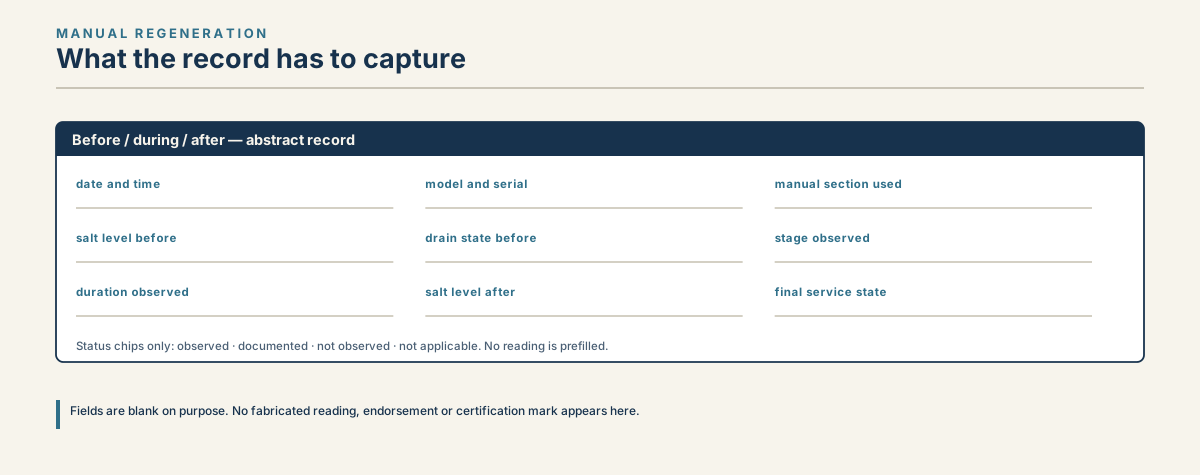
Blank before, during and after worksheet for a manual water softener regeneration, using abstract fields and status chips.
Read diagram in text
- MANUAL REGENERATION
- What the record has to capture
- Before / during / after — abstract record
- date and time
- model and serial
- manual section used
- salt level before
- drain state before
- stage observed
- duration observed
- salt level after
- final service state
- Status chips only: observed · documented · not observed · not applicable. No reading is prefilled.
- Fields are blank on purpose. No fabricated reading, endorsement or certification mark appears here.
When not to start a cycle
Hold off and deal with the problem first if you see:
- water leaking from the valve, tank or connections, or an overflowing brine tank;
- water near the plug, transformer or controller;
- a drain hose that is loose, kinked or not in its drain;
- a regeneration already in progress or an error code your manual says needs service;
- water running to the drain nonstop while the softener is supposedly in service.
A new cycle in any of these situations adds water to the problem. Put the softener in bypass if your manual shows how, and call the manufacturer or a technician.
If the cycle does not finish
If the display stays on one stage far longer than the manual's times, water keeps running to the drain after the cycle should have ended, or an error appears, stop there. Write down the stage shown, the time you started, and anything you saw at the drain or brine tank. The not-regenerating guide walks through the common causes, and the service checklist lists what a technician will want.
EPA's home maintenance guidance recommends working with a professional or the manufacturer to set regeneration from your incoming hardness and water use; a unit that keeps needing manual cycles is a good reason to ask for that review.
Frequently asked questions
Should I choose "recharge now" or "recharge tonight"?
Choose now when you need soft water today, for example after running out of salt. Choose tonight when it can wait, so the cycle runs at the programmed hour while nobody uses water. Use the exact model's command: the cited WHES18 and Fleck 5600SXT have different button/hold instructions, while the WHES48 uses touchscreen menu choices.
How long does a manual regeneration take?
About two hours on the Whirlpool units whose manuals give a figure. Other valves depend on their programmed stage times, which your manual lists. Either way, the softener is not finished until the display returns to its normal screen and water stops running to the drain.
Can I use water while the softener regenerates?
You can, but it will likely be hard. Many valves, including the Fleck 5600SXT, send untreated water to the house during the cycle, and Whirlpool warns that using hot water refills the heater with hard water. Wait for the cycle to finish before showers, laundry or the dishwasher.
Should I regenerate after adding salt?
Only if the tank had run empty or a salt bridge had cut off the brine. In that case the resin is probably exhausted, so a manual regeneration restores soft water sooner. If salt was simply low but still touching the water, add it and let the next scheduled cycle run.
Sources
Sources were consulted on the dates shown. Controllers and manual revisions change, so confirm the steps against the current manual for your valve.
- U.S. Environmental Protection Agency WaterSense, Cation Exchange Water Softeners, updated May 8, 2026; consulted August 27, 2026.
- U.S. Environmental Protection Agency WaterSense, Home Maintenance — Water Softeners, updated June 16, 2026; consulted August 27, 2026.
- NSF, NSF/ANSI 44 Technical Requirements, March 8, 2025; consulted August 27, 2026.
- Pentair, Pentair 5600SXT manual; consulted September 24, 2026.
- Whirlpool Water Solutions, Whirlpool WHES18 manual; consulted September 24, 2026.
- Whirlpool Water Solutions, Whirlpool WHES48 manual; consulted September 24, 2026.
- NSF, water-treatment standards overview; consulted August 27, 2026.
Before you continue
Every instruction here refers to the exact model on your unit's data plate. There is no universal button sequence: check the manual for your model before acting.