
Water Softener Vacation Mode and Bypass Guide
Content updated
Sources last checked
Before a long trip, EPA suggests one of four things so the softener does not waste salt and water while nobody is home: set vacation mode, put it in bypass, unplug it, or turn off the water to the house. Which one fits depends on whether anyone uses water while you are away and whether the softener could freeze.
- Short trip, nobody home: check the manual's vacation guidance and any day override; low metered demand does not rule out a scheduled cycle.
- Someone still using water (house-sitter, irrigation, animals): leave the softener in service, or bypass it if softened water is not needed.
- Main water turned off for the trip: unplug the softener too, so it does not try to regenerate without water.
- Freezing risk (unheated cabin, winterizing): bypass, unplug and drain the softener, following your manual.
Vacation rule: Choose a documented absence plan for the exact controller and household needs. Record the positions and settings. On return, follow the manual's restart checks; request a regeneration only when that procedure or a verified loss of capacity calls for it.
The four options compared
| Option | What it does | Water in the house | Good for |
|---|---|---|---|
| Vacation mode | Stops scheduled regenerations | Still softened | Trips with no one using water, on controllers that have it |
| Bypass | Sends water around the softener | Hard (untreated) | House-sitter or irrigation without needing soft water; outdoor watering |
| Unplug | Controller off, no regenerations | Still passes through the softener | Pairing with a main shutoff; short absences on timer models |
| Main water off | No water to the house | None | Empty house; limits leak damage |
EPA's water softener guide lists all four as ways to avoid wasting water and salt during an extended absence. Its home maintenance page also recommends bypassing the softener for water-intensive uses that do not need softening, such as watering the lawn or filling a wading pool.
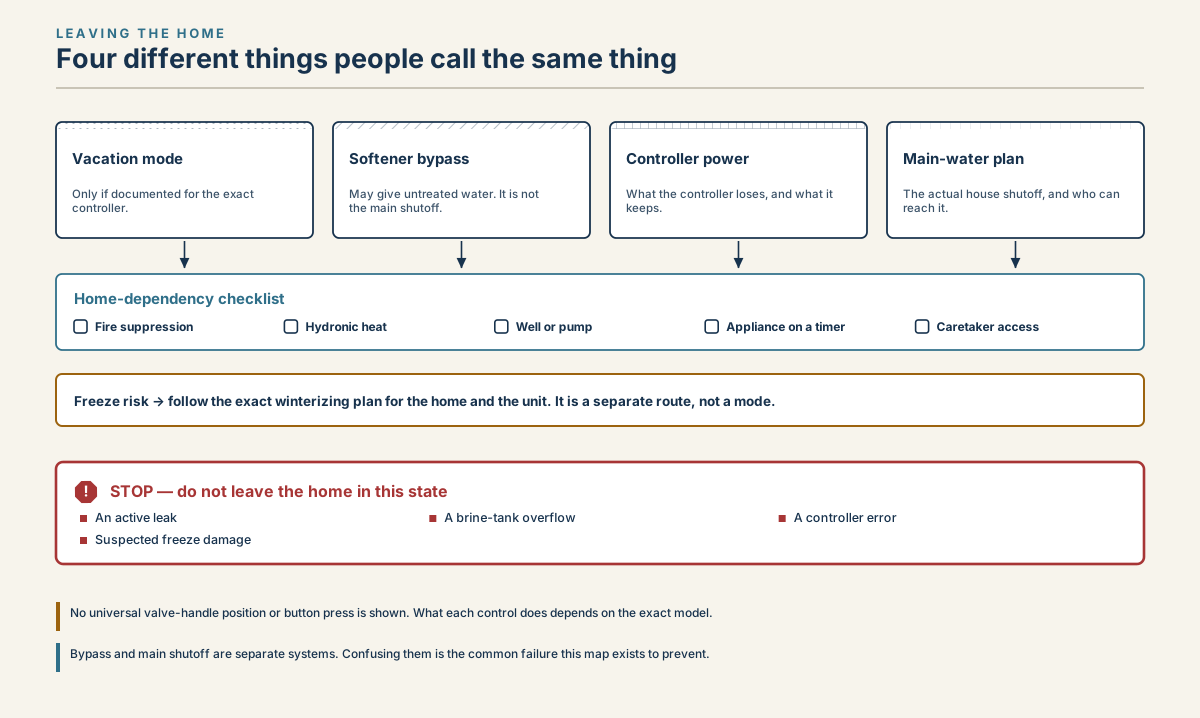
Decision map separating water softener vacation mode, bypass, power, main shutoff and freeze planning.
Read diagram in text
- LEAVING THE HOME
- Four different things people call the same thing
- Vacation mode
- Only if documented for the exact
- controller.
- Softener bypass
- May give untreated water. It is not
- the main shutoff.
- Controller power
- What the controller loses, and what it
- keeps.
- Main-water plan
- The actual house shutoff, and who can
- reach it.
- Home-dependency checklist
- Fire suppression
- Hydronic heat
- Well or pump
- Appliance on a timer
- Caretaker access
- Freeze risk → follow the exact winterizing plan for the home and the unit. It is a separate route, not a mode.
- !
- STOP — do not leave the home in this state
- An active leak
- A brine-tank overflow
- A controller error
- Suspected freeze damage
- Bypass handles and vacation settings differ by model; the article gives the Whirlpool and Pentair steps.
- Bypass and main shutoff are separate systems. Confusing them is the common failure this map exists to prevent.
Vacation mode
Some touchscreen controllers have a dedicated button. On the Pentair Fleck 5810/5812 XTR2 and the Pentair IntelliWater, Vacation Mode halts all scheduled regenerations; pressing it again resumes normal operation, and while it is on the 100-day regeneration error is suspended. Check the button list in your manual; the Whirlpool manuals read for this guide do not list one.
Without a vacation button, a demand-initiated (metered) softener already adapts: it regenerates when it has treated enough water, so with little flow it seldom cycles. A timer model can regenerate on schedule regardless of demand. Bypass changes the water route; do not assume it disables the controller's scheduled or override cycle. Use the manual's complete absence procedure. Some metered controls, such as the Fleck 5600SXT, also have a day-override setting that forces a cycle after a set number of days, so a regeneration may still run while you are away.
Bypass
The bypass valve isolates the softener and lets untreated water into the house. Pentair's 5600SXT manual describes it that way, and notes service and maintenance may also require bypassing.
How to set it:
- Single bypass valve (push-pull knob or lever on the back of the valve): move it to the bypass position shown on the valve.
- Three-valve bypass loop: open the valve in the bypass line, then close the inlet and outlet valves to the softener. This is the order Pentair's service instructions use.
Remember that bypass means hard water throughout the house, including the water heater. EPA's reminder applies: return the valve to its previous position when you are done.
Unplugging and shutting off the water
If you turn off the main water valve for the trip, which limits damage from any leak, unplug the softener as well so it does not start a regeneration with the water off. Whirlpool's WHES48 manual notes that after a long outage the clock may be wrong and regenerations may run at the wrong time until you reset it, so plan to check the time when you plug it back in.
For the electrically powered examples, removing power prevents automatic controller operation; confirm the model's guidance and state before doing so. Water routing and remaining capacity depend on the installation and valve position. Do not unplug during a cycle unless the manual's emergency procedure requires it.
Protecting a softener from freezing
Softeners are not built to freeze. Pentair's manuals warn that freezing temperatures freeze the water in the valve and damage internal parts and plumbing, and Whirlpool's manuals say freeze damage voids the warranty. Bypass and unplugging do not protect it: water stays in the tanks and valve.
If the softener is somewhere that could freeze, such as a summer cabin or lake home, Whirlpool's WHES30/33 manual says to drain all the water from it. Its steps, in short:
- Close the main water shutoff near the meter or pressure tank.
- Open a softened-water faucet to release pressure.
- Put the bypass valve in bypass (or close the inlet and outlet valves and open the bypass valve on a three-valve loop).
- Unplug the power supply.
- Disconnect the softener from the bypass or installation adapters.
- Tip it gently over a floor drain, resting the rim on a 2-inch board so the weight is not on the inlet and outlet fittings, and hold it until the water has drained.
Other designs, with separate resin and brine tanks, drain differently. If your manual does not describe winterizing, ask the dealer or a plumber, and include the softener in the home's overall winterizing plan.
Coming back
- Turn the water back on if you shut it off, and let air out of the lines through a cold tap.
- Return the bypass to service, slowly, so water refills the softener without a rush of air.
- Plug the softener in and check the time of day and settings. EPA recommends checking the programming after any power loss.
- Turn off vacation mode if you used it.
- Check the salt and top up to about half full if needed. Look for a crust; a humid, closed house can encourage salt bridges (see the salt bridge guide).
- Check for leaks and errors before requesting a cycle. If the manual's restart procedure calls for regeneration or the resin needs recharging, use its command: manual regeneration guide.
- Test treated hardness at a verified sample point after normal service resumes, following the kit's instructions.
If you drained the softener for winter, reinstall it following your manual's start-up steps; Whirlpool's, for example, include adding water and salt to the salt tank, sanitizing and a first recharge.
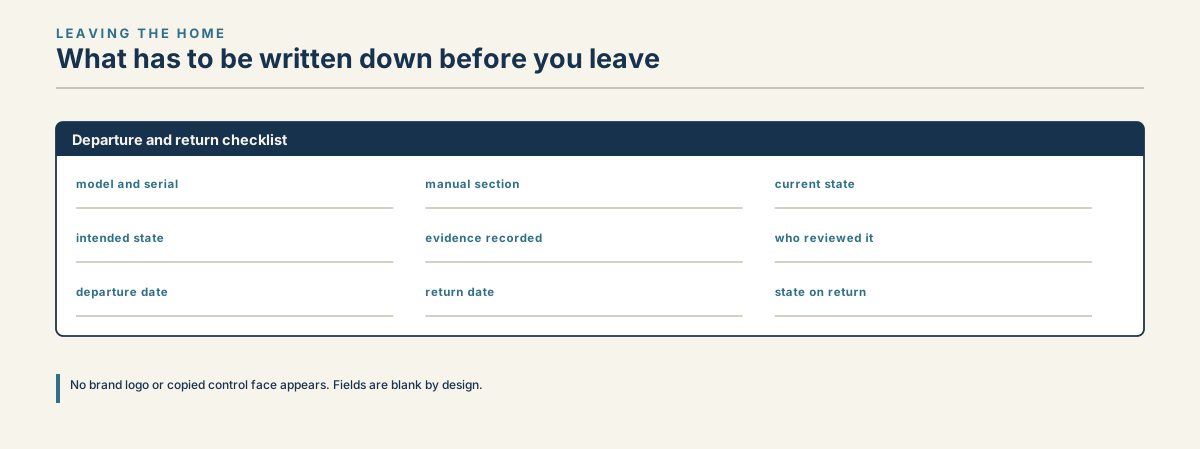
Blank departure and return checklist recording model, manual section, current state, intended state, evidence and reviewer.
Read diagram in text
- LEAVING THE HOME
- What has to be written down before you leave
- Departure and return checklist
- model and serial
- manual section
- current state
- intended state
- evidence recorded
- who reviewed it
- departure date
- return date
- state on return
- No brand logo or copied control face appears. Fields are blank by design.
Frequently asked questions
Should I turn off my water softener when I go on vacation?
For an extended absence, compare your exact manual's vacation, bypass, power and water-shutoff instructions. EPA lists vacation mode, bypass, unplugging and turning off household water as possible ways to avoid unnecessary salt and water use. Which combination is appropriate depends on the controller, any scheduled override, whether someone still needs water and freeze risk.
Is it better to bypass or unplug a water softener?
It depends on who uses water while you are away. Bypass sends hard water to the house and suits a house-sitter or irrigation. Unplugging stops regenerations but keeps water flowing through the softener, which suits an empty house. If you shut off the main water, unplug the softener too.
Can a water softener freeze?
Yes. Pentair's manuals warn that freezing damages the valve's internal parts and the plumbing, and Whirlpool says freeze damage voids the warranty. Bypassing or unplugging does not help because water stays inside. Where freezing is possible, drain the softener as your manual describes, or keep the space heated.
What should I do when I get back?
Turn the water on, return the bypass to service, plug the softener in and check the clock and settings. Turn off vacation mode and check salt, leaks and errors. Follow the model's restart procedure; a manual regeneration needs a documented reason. After normal service resumes, verify treated hardness at the correct sample point.
Sources
Sources were consulted on the dates shown. Vacation and bypass features differ by model, and freeze protection depends on the building, so check both before you leave.
- U.S. Environmental Protection Agency WaterSense, Home Maintenance — Water Softeners, updated June 16, 2026; consulted September 24, 2026.
- Pentair, Pentair 5600SXT manual; consulted September 24, 2026.
- Pentair, Pentair Fleck 5810/5812 XTR2 manual; consulted September 24, 2026.
- Pentair, Whole House Water Softening System Installation and Operation Manual; consulted September 24, 2026.
- Whirlpool Water Solutions, Water Softener Installation and Operation Manual, document 7392301; consulted September 24, 2026.
- U.S. Environmental Protection Agency WaterSense, Cation Exchange Water Softeners, updated May 8, 2026; consulted September 24, 2026.
- Whirlpool Water Solutions, Whirlpool Water Softener & Filtration System Manuals; consulted September 24, 2026.
- U.S. Environmental Protection Agency WaterSense, Guide to Selecting and Maintaining a Water-Efficient Water Softener, May 2026; consulted September 24, 2026.
- Pentair, IntelliWater Connected Water Softener Service Manual, Installation and Operation Guide; consulted September 24, 2026.
- Whirlpool Water Solutions, Whirlpool WHES48 manual; consulted September 24, 2026.